

### Blog Post:
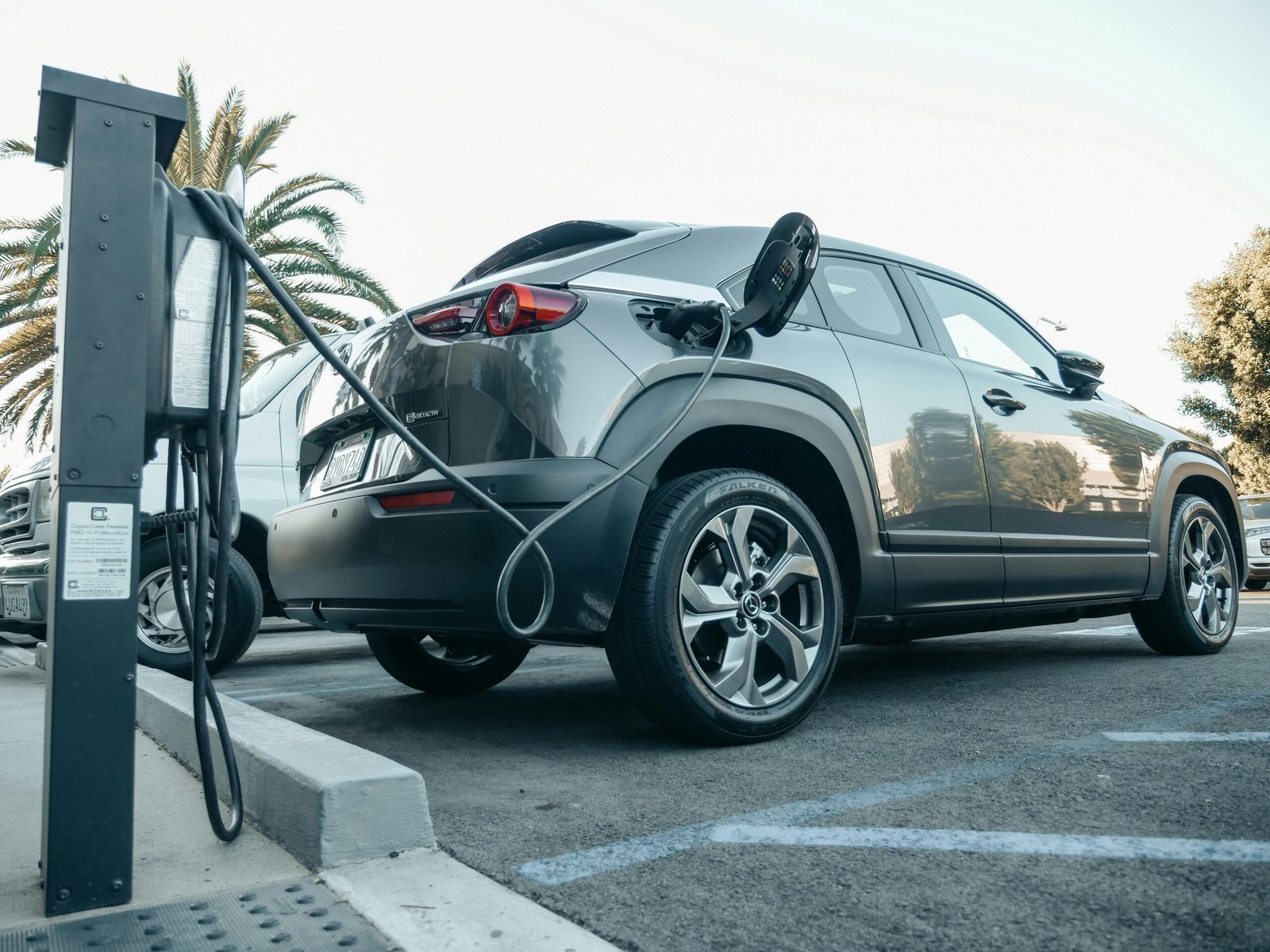
EV charger installation home is a project more homeowners are tackling, but the smartest savings come from knowing when to hire a licensed electrician and when a DIY Level 2 install makes sense. This no-fluff guide breaks down every major cost, pinpoints permitting slowdowns, and tackles the hidden safety checks most articles skip.
Key Takeaways
- Realistic home EV charger cost: expect $800–$3,000+ installed, with equipment, labor, permit, and possible upgrade costs—budget for your wiring situation.
- DIY Level 2 installs only make sense for simple, short runs with existing 240V wiring—permits and critical safety checks are not optional.
- Skipping a licensed electrician opens you up to failed inspections, electrical hazards, and insurance risks—know your true risk before you DIY.
- How much does EV charger installation at home really cost? (Quick snapshot)
- Line-item cost breakdown: equipment, labor, permits and common add-ons
- How region & local labor rates change your quote (regional examples)
- How existing 240V wiring or long runs affect price and complexity
- Permits, inspections and total timeline — what to expect (national view + impacts)
- DIY installs — common challenges, complaints and when DIY makes sense
- The real risks and hidden costs of skipping a licensed electrician
- Three crucial safety & compatibility issues often overlooked (actionable checklist)
- Best home EV chargers — 2024 baseline and what to watch for in 2026
- Hiring checklist — 10 questions to vet electricians & sample scope for quotes
- Quick DIY safety checklist & minimal permit steps (for low-risk installs)
- Top three content gaps competitors miss — how this piece will outrank
- Sources to collect before you write (research to fill the gaps)
- FAQ
How much does EV charger installation at home really cost? (Quick snapshot)
Before you get lost in the details, here’s what most homeowners actually pay for a Level 2 home EV charger install (excluding equipment): the national average landed at $2,442 in 2024. Total EV charger installation home costs typically range from $800 to $3,000, driven by whether you already have accessible 240V wiring, your panel’s capacity, and permit requirements in your area. Know this up front: equipment, labor, and permits are separate charges—and panel upgrades quickly push your total to $4,000 or above.
Line-item cost breakdown: equipment, labor, permits and common add-ons
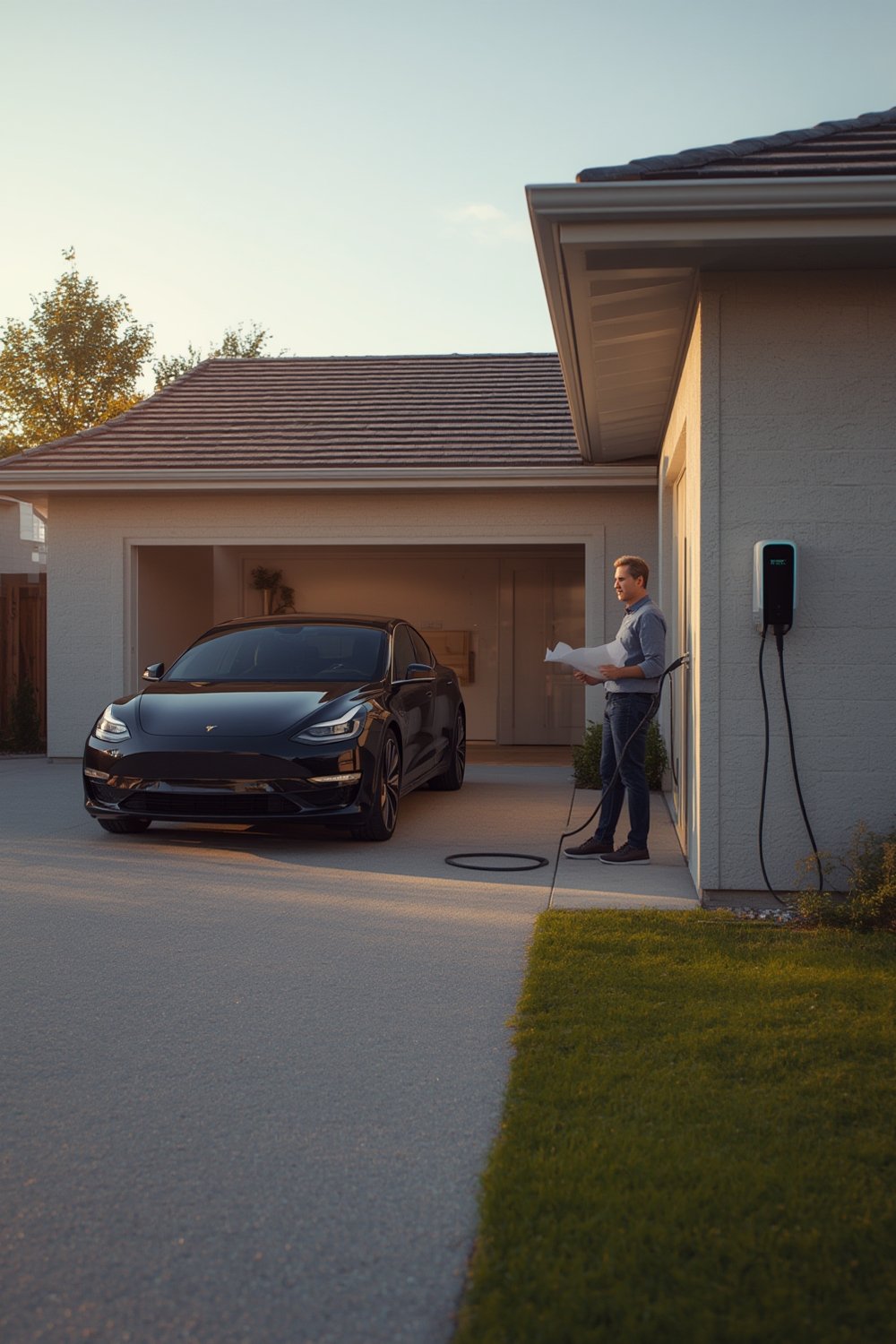
Breaking down the costs helps you control your budget and compare real quotes. Here’s what you’ll typically face for Level 2 EV charger installation:
- Equipment/Charger Unit: $300–$1,200. Basic models (16–32A) start near $300. Smart chargers (WiFi, scheduling) hit $500–$1,200. Premium/high-amp or Tesla models can cost $800–$2,000. Example: Tesla Wall Connector is ~$475.
- Labor: $300–$1,200 for standard installs, assuming no major upgrades needed.
- Permits: $50–$200 (national average is $297, but it varies by city/county).
- Panel Upgrade: $1,500–$4,000 if your panel can’t handle the extra 40–60A load.
- Common Extras:
- Conduit/wire (long runs): $5–$8/ft for wire/conduit. Trenching is $10–$25/ft if you have to cross a driveway or yard.
- GFCI breaker: $100–$200, usually required for safe, code-compliant installs.
Costs are lowest if your main electrical panel is close to the install site and has spare capacity. For complex installations, upgrades and extra wiring can quickly double or triple the cost. For more on budgeting, check similar pricing breakdowns from My Home Quoter.
How region & local labor rates change your quote (regional examples)
Home EV charger cost swings dramatically by state—often due to electrician labor rates and permitting backlogs. Here are real 2024 averages for Level 2 installs (equipment excluded):
| State/Region | Avg. Install Cost |
|---|---|
| Oregon | $1,834 |
| California | $2,576 |
| New York | $2,624 |
| Mississippi | $3,680 |
Expect quotes at the low end (under $2,000) in the Pacific Northwest and Midwest, with noticeably higher quotes in the Northeast and deep South. California is mid-high due to labor demand and code enforcement. Urban areas mean longer permit approval times, too. See EnergySage’s regional breakdown for more cost references.
How existing 240V wiring or long runs affect price and complexity
This is the biggest hidden accelerator or killer for a budget. If you already have a suitable 240V circuit (like from an unused dryer outlet) right next to your install site, a simple job costs just $300–$800 in labor. But adding a new high-capacity circuit, especially with long wire/conduit runs or a trenching requirements out to a detached garage, balloons costs.
- Short, easy run: Labor typically $300–$500.
- Long wire/conduit runs: Add $5–$8/ft. Trenching doubles it to $10–$25/ft.
- New circuit or panel upgrade: Entire job can hit $1,500–$4,000 extra.
Pro tip: Measure the actual path from your main panel to the charging location. Any walls, obstacles, or distance will go straight onto your quote.
Permits, inspections and total timeline — what to expect (national view + impacts)
EV charger permit requirements are not optional for most U.S. cities—especially for Level 2 and any new wiring. Typical permit fees run $50–$200, but the national average is $297 (range $45–$720). After the electrician submits for permit, approval often takes 2–10 days (longer in busy areas or where “Authority Having Jurisdiction” is slow).
The electrician does the physical install in one day—usually 4–8 labor hours. However, you can’t legally operate the charger until an inspector signs off, which can add 1–2 weeks depending on your city’s backlog. High-regulation states (California, New York) see more delays. Find more specifics in permit and inspection guides.
DIY installs — common challenges, complaints and when DIY makes sense
If you’re handy and want to save on labor, you might consider doing your own EV charger installation home. DIY only makes sense when:
- There’s already a properly sized 240V circuit within 10–20 feet of install site.
- You have clear knowledge of local permit/inspection process for your city.
- No panel upgrade or trenching is required (those add real risk and cost).
Most DIY headaches reported in install guides—but not thoroughly documented by forums—include:
- Unexpected panel capacity limits (can’t add a new circuit without an expensive upgrade).
- Trenching requirements across driveways/yards ($10–$25/ft) not realized until too late.
- Permit paperwork errors or failed final inspection for skipped safety steps.
No large batch of user forum reviews flagging complaints—this is a key content gap and opportunity to learn from others, since direct feedback is scarce.
The real risks and hidden costs of skipping a licensed electrician
Here’s what you risk when you do not use a licensed electrician for EV charger installation home:
- Failed inspection: Delays use until corrected, since code violations are caught at final inspection.
- Voided warranty: Some charger manufacturers require pro install or warranty is voided.
- Insurance denial: If fire or damage results from improper installation, insurance claim may be denied.
- Electrical hazards: Improper wiring or inadequate breakers can cause shock, arc fault, or fire.
- Downstream repair costs: Panel or wiring repairs after failed install run $1,500–$4,000, wiping out any labor savings.
Every major guide now recommends you hire a licensed electrician unless your situation is extremely simple. You can see more on the calculated risks at Qmerit’s blog.
Three crucial safety & compatibility issues often overlooked (actionable checklist)
Even professional installations sometimes miss key safety or reliability factors. Here’s what to insist on before you plug in:
- Proper breaker/GFCI/Arc/AFCI protection:
- Confirm a GFCI breaker (about $100–$200) is included—it is often code.
- For detached garages or outdoor units, ask about arc fault/ground fault protection (AFCI/GFCI combo breakers).
- Panel capacity and load calculation:
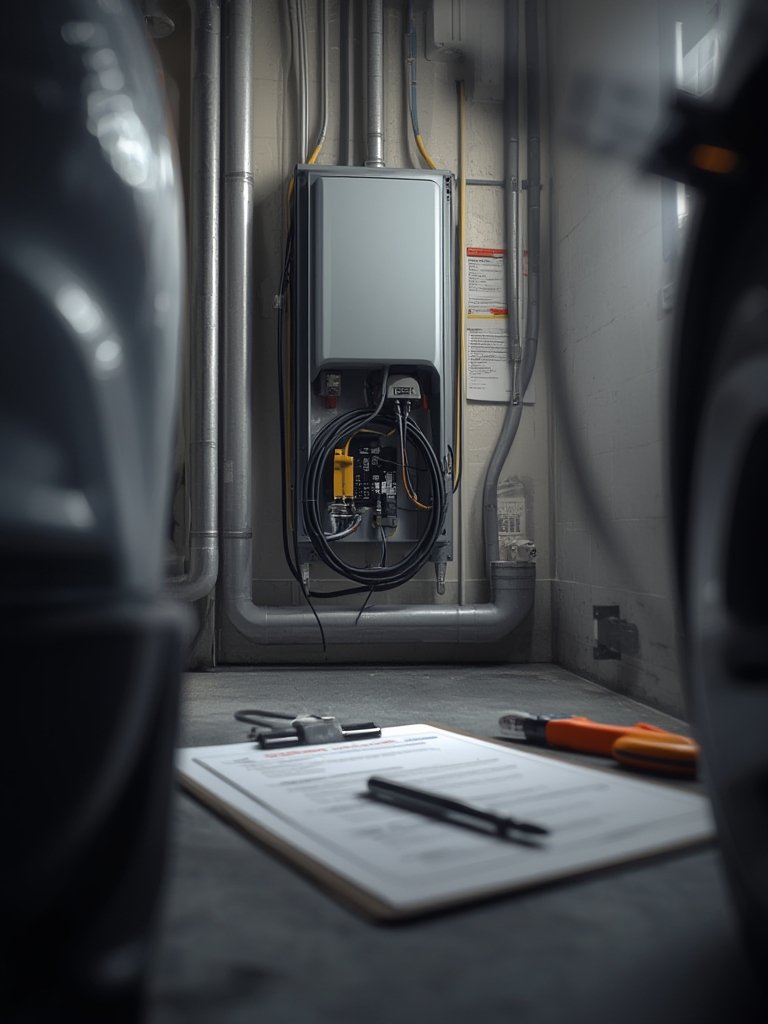
- Has your electrician done a full load calculation to ensure your panel can handle another 40–60 amperes?
- Ask to see it. A missed calculation leads to tripped breakers or a $1,500–$4,000 panel upgrade later.
- Wiring gauge/voltage drop/connector compatibility:
- For every 25 feet from your panel, wire size must increase. Long runs require heavier gauge to avoid voltage drop and overheating.
- Be certain the outlet and connector (NEMA 14-50, hardwired, etc.) matches both EV and EVSE’s max amp rating.
Review more technical considerations in our Level 2 EV charger installation checklist.
Best home EV chargers — 2024 baseline and what to watch for in 2026
Choosing a charger? Here’s the practical breakdown for 2024 Home EV chargers (Level 2):
- Basic (16–32A): $300–$700, usually no WiFi/app features. Simple, robust, install-friendly.
- Smart (WiFi/app, 32–48A): $500–$1,200. Adds scheduling, monitoring, some integrate with solar or apps.
- Premium (48–80A): $800–$2,000, higher load, more rugged builds, advanced connectivity.
- Tesla Wall Connector: ~$475, 48A, excellent value if you own a Tesla or compatible EV.
No authoritative product data exists yet for best home EV charger 2026 models—OEMs will likely add more dynamic load balancing, weather resistance (higher IP ratings), and smarter OCPP/Open standards for fleet/home integration. If you want pre-buy confidence, track 2025/2026 OEM press releases for durability and update guarantees.
Hiring checklist — 10 questions to vet electricians & sample scope for quotes
When requesting quotes, give electricians this itemized checklist, and use the sample scope language below for clarity:
- Will you obtain and close out the permit and arrange inspection?
- How many feet from panel to install location, and will this require conduit or trenching?
- Is my main panel large enough, or will a panel upgrade ($1,500–$4,000) be needed?
- Will you install correct size GFCI/ARC breaker and perform panel load calculation?
- Which brand/model of charger unit do you recommend, and why?
- What is the warranty on your work and the unit itself?
- Can you provide references for recent Level 2 installs?
- Who schedules the inspection and is present for commissioning?
- What is the timeline from deposit to completed, signed-off job?
- Does your itemized quote match this sample scope:
Install owner-supplied (or specify brand) Level 2 EV charger. Labor: $300–$1,200. Permit: $50–$200. Conduit/wire for (specify) feet, panel upgrade if needed ($1,500–$4,000). Complete all local inspection requirements and provide commissioning/test documentation.
With this list, you’re protected against scope creep and can compare apples-to-apples on home EV charger cost.
Quick DIY safety checklist & minimal permit steps (for low-risk installs)
For a simple install—existing 240V circuit within 10–20 feet, no panel upgrade necessary—follow these strict steps:
- Measure total run length and confirm breaker amps match charger manufacturer’s requirements.
- Photograph panel label and breaker layout for reference and permitting.
- Verify if your local authority requires a permit (they usually do, even for DIYers). Apply before starting work.
- Mount and wire per manufacturer’s instructions. Double-check terminal torque and ground connection.
- Request inspection and test that the EVSE commissions correctly (flashes proper status, charges at rated speed).
Even simple installs near existing 240V wiring cost $300–$800 in labor if you hire out, but the paperwork and safe operation are still 100% necessary. For most how to install EV charger at home questions, a 30-minute call with your city’s permit office clarifies your requirements fast.
Top three content gaps competitors miss — how this piece will outrank
Most highly ranked guides miss critical actionable details:
- DIY feedback gap: No competitor gives user-sourced complaints, troubleshooting, or real photos from forum threads (DIY fail stories, especially).
- State-specific permit/inspection: Existing articles average costs nationwide, but don’t link actual AHJ permit forms, requirements, or timelines for your state/county.
- Safety/compatibility “gotchas”: Few guides explicitly list missed steps, like wire gauge for voltage drop or mis-matched outlets/adapters—real sources will add authority here.
We will link directly to state AHJ pages, aggregate forum anecdotes, and list expert-level checklists to set this resource apart. See examples at EnergySage.
Sources to collect before you write (research to fill the gaps)
To build the definitive EV charger installation home guide, gather:
- 10–20 excerpts or images from r/EV, Tesla forums, EVOwnerClub threads on DIY/installer pros and fails
- Direct links and screenshots of permit steps from state AHJ pages: California, New York, Texas, Florida, Oregon
- At least 3 live electrician quotes per metro (to show the spread and itemization style—screenshot/sample PDF)
- 2026 charger OEM announcements or public roadmap press releases (if available)
Without these sources, you only have generic content. For current permit averages and labor splits, see My Home Quoter.
FAQ
How do I estimate total home EV charger cost before getting a quote?
Tally up your charger model ($300–$1,200), basic labor ($300–$1,200), permits ($50–$200), plus any obvious extras (trenching, conduit, panel upgrades). For most, a realistic all-in budget is $1,200–$3,000, but always check your panel capacity and how far your charger will be from the main panel.
Can I install a Level 2 EV charger at home without a permit?
Rarely. Nearly every U.S. city and county requires a permit for new 240V circuits or substantial electrical changes, especially for Level 2 chargers. Skipping the permit can void your insurance and cause failed inspection if you sell your home later.
What is the main reason DIY EV charger installation fails inspection?
The biggest causes are undersized breakers, incorrect wire gauge (especially for long runs), no GFCI/AFCI protection, and lack of proper paperwork. Even if everything is wired safely, skipping load calculations or not following manufacturer mounting instructions will trigger failure.
Is a panel upgrade always needed for EV charger installation home?
No, but it’s common in older homes with no spare amperage. If your panel can’t handle at least 40–60A extra load, a professional will usually recommend a $1,500–$4,000 upgrade for safety and code compliance.
How can I avoid hidden labor costs when hiring an electrician?
Ask for an itemized written quote including permit fees, all materials (conduit/wire), any trenching, panel upgrades, and inspection handling. Request recent references—good electricians will volunteer “apple-to-apple” pricing transparency from other jobs in your area.
—