

EV charger installation home is on the mind of many new EV owners, but the true cost, step-by-step process, and risks are often glossed over. Here’s a hard-nosed, practical guide to what you’ll actually pay, what commonly goes wrong, and what you must do right—before setting out to install a home EV charger or hire a pro.
Key Takeaways
- Total home EV charger installation cost in 2024 typically ranges from $800 to $3,000, with major costs in equipment, labor, and permits.
- Permits and local code compliance are not optional—missing this step risks failed inspections and voided warranties.
- DIY is feasible for some, but panel upgrades, complex wiring, and permit rules mean many should hire a licensed electrician.
- Quick summary — what you’ll pay and what you must know before you start
- Cost breakdown — Level 1 vs Level 2 (parts, labor, permits, panel upgrades)
- State and city snapshots — market pricing
- Permits & inspections — what homeowners frequently miss
- Incentives, rebates & tax credits — how to cut the effective cost
- DIY step-by-step procedure
- Most common DIY mistakes, safety hazards, and warranty traps
- Troubleshooting & commonly reported frustrations
- What to look for in the best home EV chargers for 2026
- Hire vs DIY decision checklist — when to call an electrician
- Realistic timelines & final cost estimator worksheet
- Coverage gaps top articles miss — three areas to drill into
- FAQ
Quick summary — what you’ll pay and what you must know before you start
Expect to spend between $800 and $3,000 on EV charger installation home in most suburbs, with the bulk going toward the charger itself, an electrician’s labor, permitting, and possible upgrades to your home’s electrical panel. Permits, inspections, and city code are not optional. DIY can save some money if you’re handy and have modern electrical infrastructure, but for most, hiring a licensed electrician is a smarter bet—especially if a panel upgrade is likely or local code is strict. Always check your local EV charger permit requirements and get quotes for both installation and possible upgrades before buying a charger.
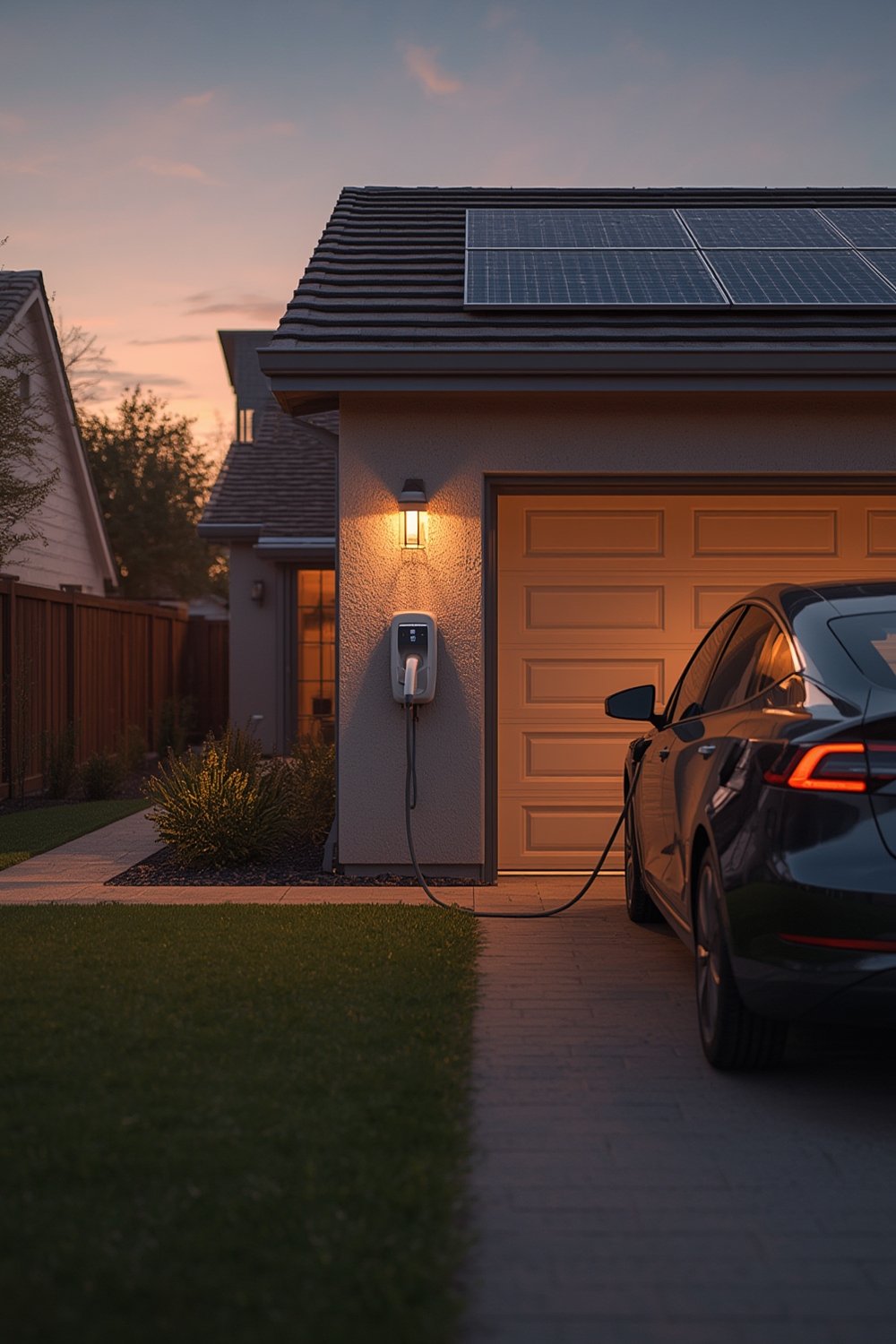
Cost breakdown — Level 1 vs Level 2 (parts, labor, permits, panel upgrades)
The home EV charger cost depends on whether you’re installing Level 1 (uses a standard outlet, slow charging) or Level 2 EV charger installation (faster, requires 240V and usually new wiring):
| Item | Level 1 | Level 2 |
|---|---|---|
| Charger (equipment) | Usually included | $400–$800 |
| Labor | $200–$400 | $400–$1,500 |
| Permit/Inspection | $0–$150 | $50–$300 |
| Panel Upgrade (if needed) | $0 | $1,000–$4,000 |
| Total | $300–$600 | $700–$2,700+ (Up to $5,000+ if panel upgrade needed) |
The level 2 EV charger installation is what most EV owners choose for genuine overnight charging. Adding a panel upgrade or running wiring a long distance (e.g., detached garage) is what pushes costs much higher. For details see trusted reports from Sunlife Now and EnergySage.
Who usually pays the most?
- Older homes with outdated or small electrical panels
- Detached garages or long runs from panel to parking location
- Areas with high permit fees or strict inspection rules
State and city snapshots — market pricing
What you’ll actually pay for EV charger installation home varies widely by state and city. Here are representative averages (installation cost, not including charger):
| State | Avg Cost |
|---|---|
| California | $2,576 |
| Texas | $2,186 |
| Florida | $2,087 |
| New York | $2,624 |
| Illinois | $2,882 |
| Oregon (lowest) | $1,834 |
| Mississippi (highest) | $3,680 |
| USA average | $2,442 |
- Example: Los Angeles, CA — Level 2 EV charger installation often prices between $700 and $2,000 (see source).
Permits & inspections — what homeowners frequently miss
Missing a permit is the #1 reason home EV charger projects fail or need costly rework. Most regions require a permit for any new 240V circuit or hardwired charger. Permitting fees run $50–$300 (sometimes higher). Expect to pay $150–$300 in many cities; some areas as high as $720, per EnergySage. Licensed electricians typically handle permit paperwork, but if you’re DIYing, you are responsible—skipping this step may fail inspection and void insurance or warranties.
- Some DIYers use existing 240V dryer outlets with devices like smart splitters (see NeoCharge) as a loophole. Many localities still require notification or inspection.
- Inspectors will check: breaker size, wire gauge, GFCI protection, signage, correct labeling, grounding, and charger sticker/manual adherence.
- After installation, a city/county inspector must usually sign off before you use the charger.
Incentives, rebates & tax credits — how to cut the effective cost
You can lower your home EV charger cost by stacking incentives. As of 2024, the Federal Alternative Fuel Vehicle Refueling Property Credit (Section 30C) covers 30% of installation costs up to $1,000 for primary residences in qualified locations (details).
- Check your address: Only certain census tracts qualify for the $1,000 federal tax credit.
- Utility/State Rebates: Many utilities and state energy offices offer additional rebates, often $100–$1,200 but vary by ZIP code. See your electric company’s website and FLO’s cost guide.
- Rebates may require proof of permit, licensed install, or charger registration, so document each step as you go.
DIY step-by-step procedure
Considering how to install EV charger at home yourself? Here’s the realistic high-level roadmap most manufacturers reference, though you must double-check with local code and your charger’s installation manual:
- Choose the mounting location (garage or exterior wall close to vehicle). Measure cable reach with door closed.
- Check service and panel capacity. See if there’s a spare 240V breaker slot; confirm with the panel diagram or by opening the cover (applicable only if you’re qualified—otherwise, call an electrician).
- Apply for required permits with your city or county. (This can take 1–4 weeks.)
- Run conduit and wiring from panel to mounting spot, following all code: proper wire size, approved conduit, GFCI protection, and correct labeling.
- Mount the charger using heavy-duty hardware, follow the manufacturer’s stud-mounting diagrams, and keep height within ADA/code spec (often 18–48 inches above the ground).
- Install dedicated breaker and wire to panel (only if you have the skills and permitting—you must never touch the main panel if untrained; risk of death or fire).
- Schedule and pass inspection (required before full operation). Keep installation manual and permit for inspector.
- Register the charger and keep all receipts for rebates, warranty, and tax filings.
If at any point you are uncertain, stop and hire a pro—especially for breaker installation, panel upgrades, and hardwiring steps.
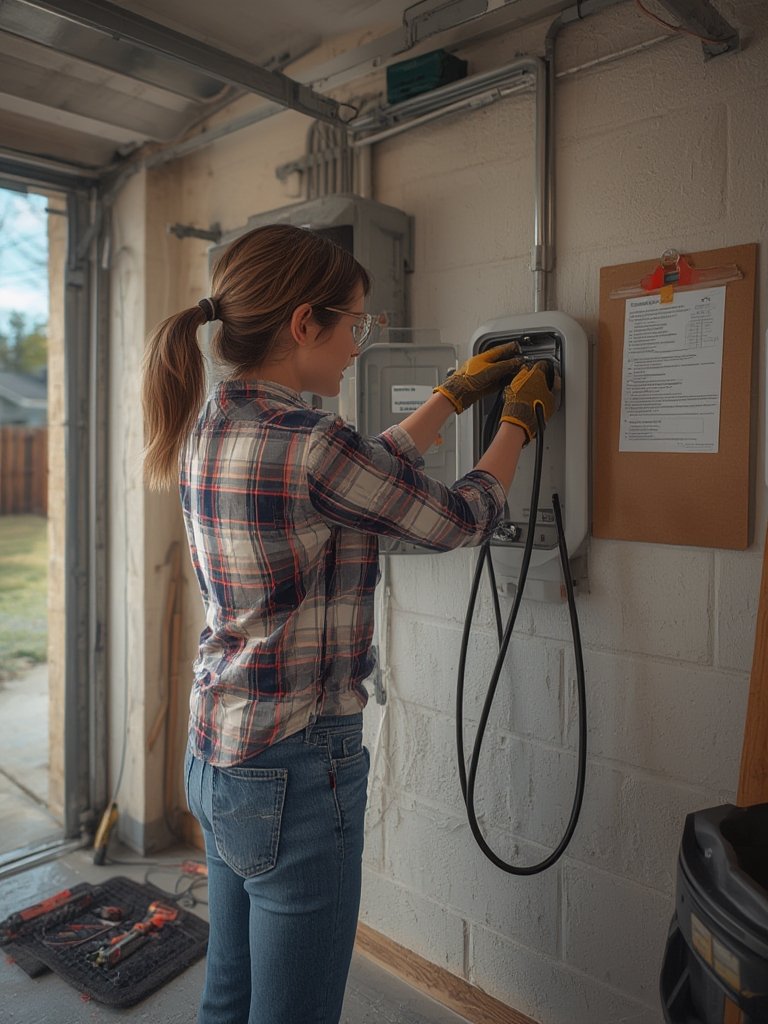
Most cities will reject installations that skip permits, don’t use GFCI protection, or mismatch wire and breaker sizes.
Most common DIY mistakes, safety hazards, and warranty traps
- Undersized breaker or wiring: Using 30A wire/breaker for a 40A charger risks fire or failed inspection. Always match your charger’s exact specs.
- Skipping permits or inspection: Common mistake that can void your home insurance and charger warranty.
- Poor labeling or missing GFCI: Unmarked or incorrectly labeled panels and missing GFCI protection will always fail inspection—per manufacturer and code.
- No proper ground: Not connecting the ground properly is the leading DIY electrical hazard. Use a voltage tester and confirm against your panel schematic (or have a licensed pro do it).
- Overestimating panel capacity: Calculating “close enough” can overload your main service and even cause brownouts when multiple appliances run.
- Installing without following manual: Many manufacturers explicitly require compliance to uphold the warranty. Skipping steps or substituting parts can permanently void support (per manufacturer guidance).
- Leaving charger software/firmware updates incomplete, causing connectivity or operation bugs post-install.
Remediation Checklist
- After install, use a voltage tester at the charger terminals before plugging in the vehicle.
- Double-check every connection is torqued per manufacturer specs, especially ground and neutral.
- Keep inspection tag and manual handy for any future insurance or warranty claims.
Troubleshooting & commonly reported frustrations
Review aggregation and owner forums in 2024 highlight the following technical pain points for home EV charger installation:
- Panel or main service too small: Discovering you need a costly upgrade late in the process.
- Long cable runs: Extra conduit, bends, or buried cable routes add to cost and installation time.
- WiFi/App Setup Woes: Many chargers have unreliable or buggy smartphone integration or require a 2.4GHz network signal only accessible near the charger location.
- Firmware issues: Some EVSEs require an app update or firmware flash to operate smoothly—often missed in DIY installs.
- Permit delays: Municipal backlogs or unclear inspection schedules leave some owners waiting weeks to use their new charger.
Before hiring, ask contractors about known app issues, panel upgrade policies, and what their warranty covers in writing.
What to look for in the best home EV chargers for 2026
The best home EV charger 2026 choices will have advances in connectivity, amperage, and safety—but feature requirements have not changed as quickly as marketing suggests. Current top-rated models on manufacturer and aggregator pages share these must-have features:
- Amperage/Max Output: 40A–50A for future vehicles (at least 9.6–12kW)
- Smart Connectivity: App control, WiFi, scheduled charging, OTA updates
- Cable Length & Storage: 20-feet minimum and a robust holster/hanger
- Universal Connector: SAE J1772 for compatibility, or NACS if specific to Tesla
- Plug-In vs Hardwired: NEMA 14-50 plug is convenient, but hardwired offers cleaner look and greater safety/security (often required for maximum amperage)
- Energy monitoring and automated load management features (helps avoid panel overload, especially for multi-EV or solar homes)
- UL/ETL listing, at least 3-year warranty, and positive user ratings above 4.2/5 (per EnergySage)
- Installer-friendly mounting system, simple firmware updates, and well-written manuals
Don’t base your buying decision on one review—look for year-over-year user satisfaction scores and check for recent EV charger recalls.
Hire vs DIY decision checklist — when to call an electrician
- Do you have experience with 240V wiring, GFCI installation, and proper conduit use?
- Is your main panel modern and do you know its load capacity? (Guide)
- Are you comfortable applying for permits and passing an in-person inspection?
- Will your charger’s warranty or local rebate require a licensed installer?
- Do you own quality tools including voltage meter, torque driver, and PPE?
- If any answer is “no” or you’re unsure, hire a licensed electrician. Labor typically adds $400–$1,500, panel upgrades another $1,000–$4,000, and permits $50–$300—but you gain peace of mind and liability protection.
Questions to ask any electrician:
- Are you licensed and insured for EVSE installs? (Request their license #.)
- Do you handle the permit paperwork and inspection?
- Will you check my panel for load issues before quoting?
- Can you recommend the best charger for my car and future needs?
- What is included in the written quote (labor, permits, material, warranty)?
Realistic timelines & final cost estimator worksheet
Here’s what a typical installation workflow looks like, including possible delays:
- Get quotes from 2–3 licensed electricians (1–7 days)
- Apply for permit (1–21 days, most cities 3–7 days)
- Schedule installation (1–2 weeks after permit approval)
- Schedule inspection (1–10 days post-install; can sometimes be same day as installation)
- Collect documentation for rebate/tax filing (as soon as inspection tag is received)
Simple Cost Worksheet
- Electrician’s quote (labor, material): $________
- Charger (equipment): $________
- Permit/Inspection: $________
- Panel Upgrade (if needed): $________
- Minus incentives/rebates: –$________
- Estimated total: $________
Refer to up-to-date state averages (see above) and check all receipts to confirm eligibility for tax credits or rebates.
Coverage gaps top articles miss — three areas to drill into
What this guide covers (others don’t):
- Real user-reported technical challenges and troubleshooting insights from current (2024) forums and reviews.
- A clear, publisher-vetted DIY procedure with practical safety and permit callouts—not just sales material.
- Buyer guidance based on real features, ratings, and future-proofing—not vague “best of” lists. See best home EV charger 2026 for more.
Top articles routinely skip detailed DIY steps, real owner headaches, and current model-by-model comparisons. We close those gaps here.
Conclusion
Installing a home EV charging station is a smart investment, but a true EV charger installation home project demands careful cost planning, proper permitting, and a clear choice between DIY and hiring a pro. Get quotes, check permit obligations, and do not cut corners. If you’re ready to begin—or want to see which options suit your home—contact a local electrician now for a no-pressure quote or explore our installation checklist for more details.
FAQ
How much does it cost to install a home EV charger in 2024?
Most homeowners pay $800 to $3,000 all-in. Level 2 charger installation is usually $700–$2,700 before panel upgrades; with upgrades, it can reach $5,000+.
Do I need a permit to install a Level 2 EV charger at home?
Yes, most localities require a permit for any new 240V circuit. Permit fees run $50–$300 and inspections are required on completion.
Can I install an EV charger myself?
DIY is possible, especially if you already have a suitable outlet. However, most installations need new wiring, panel checks, and must pass inspection. Always check local permit rules before proceeding.
Are there any tax credits or rebates for home EV charger installation?
Yes. The 2024 federal tax credit is 30% up to $1,000 (Section 30C), but only applies in eligible areas. Many utilities and states also offer rebates—always check before buying.
What’s the best EV charger to buy for future use?
Look for models with 40A–50A output, smart app features, long cables, strong user ratings, and universal connectors. For future updates, visit our best home EV charger 2026 guide.